
What Agriculture Companies in CALIFORNIA’S Central Valley Should Film This Harvest Season
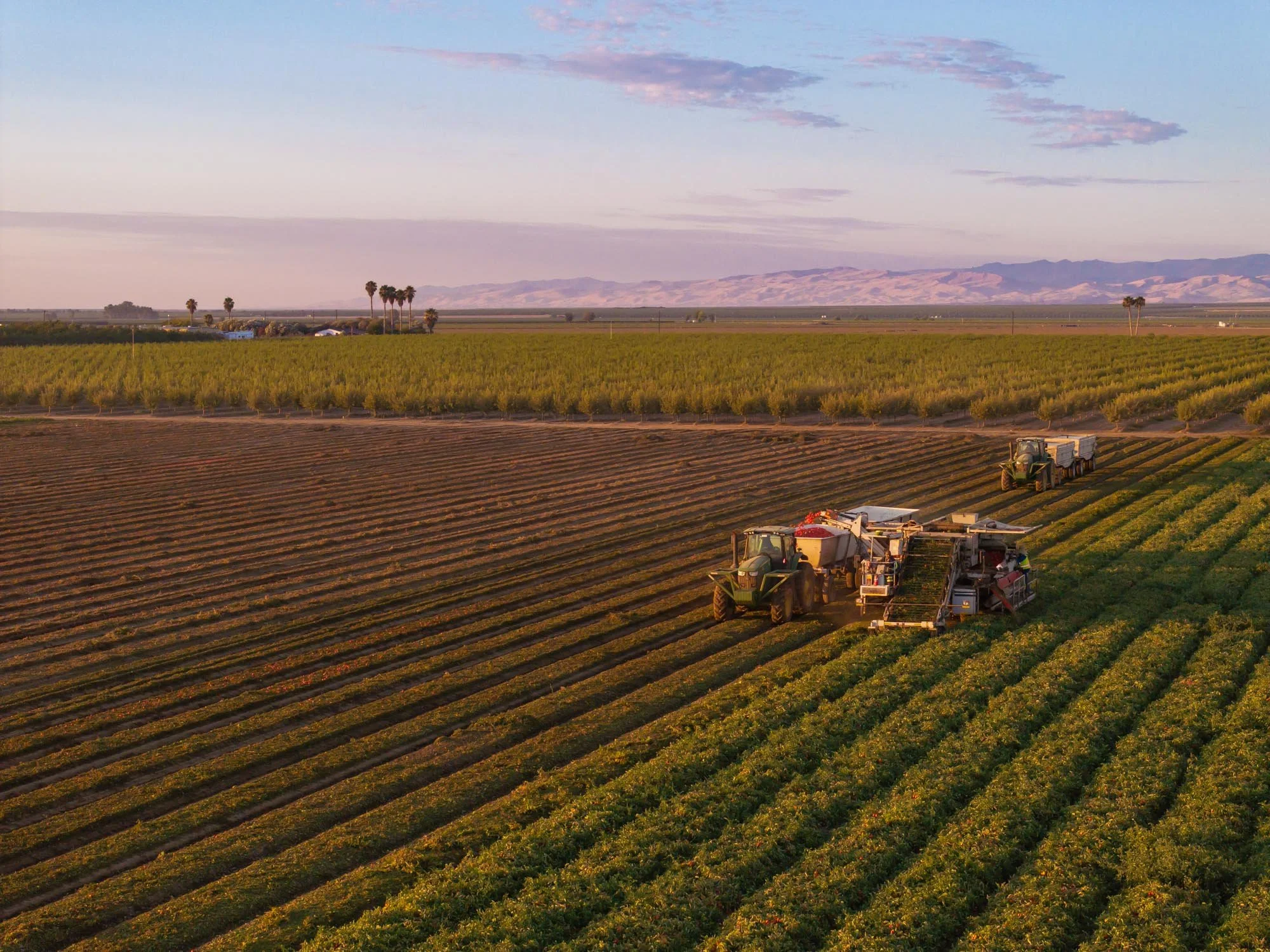
Harvest is one of the few times each year when an agriculture company can show the full scale of its operation in motion. Orchards, fields, receiving areas, processing lines, trucks, equipment, and the people who keep everything moving all become visible at once.
For growers, processors, packers, equipment manufacturers, and food brands across California’s Central Valley, that makes harvest the best time to create a visual library that will work long after the season ends.
Our recent footage at Ingomar, a major tomato processor in the Central Valley, is a good example. The most compelling moments are not staged. They are the real rhythm of the work: trucks arriving, tomatoes moving through the operation, the scale of the facility, and the teams behind the product. A short window of access can produce material for a brand film, recruiting campaign, website refresh, trade-show reel, and months of social content.
Why Harvest Footage Matters
Agriculture is often marketed with a single orchard image or a carefully styled product shot. Those images have a place, but they rarely show the real strength of a company: the people, systems, timing, equipment, and care required to bring a crop from the field to market.
Harvest footage does.
It gives buyers, employees, distributors, and customers a direct view into the operation. It can communicate scale without exaggeration. It can show food-safety practices, quality control, teamwork, and the connection between the farm and the finished product.
For companies that sell to customers outside the Central Valley—or outside the United States—this matters even more. Video and photography give a buyer who may never visit the property a credible look at how the business operates.
The Essential Footage to Capture
The best harvest shoot is not a random collection of drone clips. It is a planned visual record of the business. Start with the story you want a viewer to understand, then capture the moments that support it.
1. The Land, Crop, and Scale of the Operation
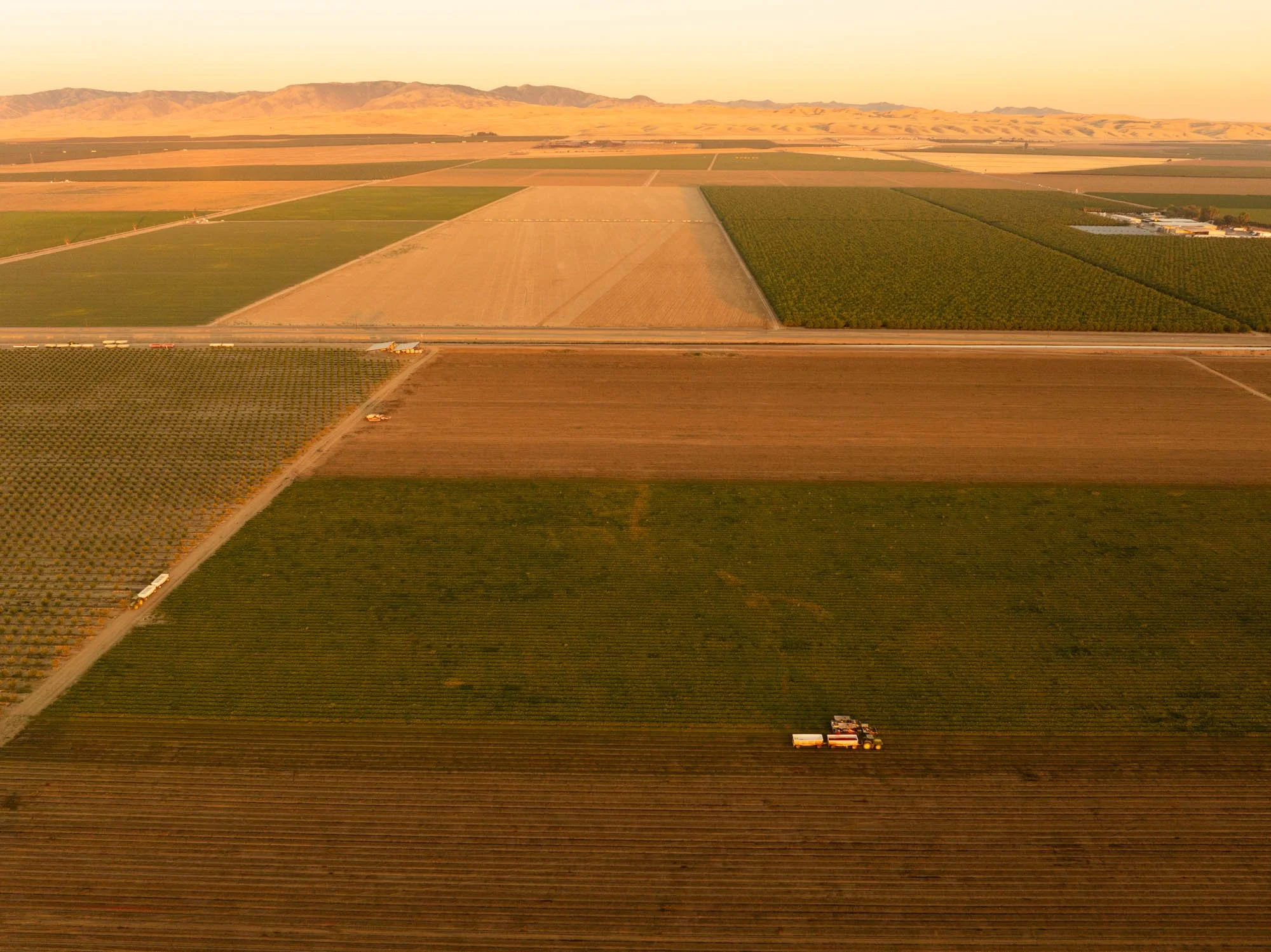
Begin with the environment. Wide photographs and aerial footage establish where the work happens and how large the operation is. Depending on the crop, that may mean long orchard rows, vineyards, open tomato fields, dairy facilities, packing yards, or processing plants.
Aerial footage is especially useful when it reveals something ground-level coverage cannot: the size of the acreage, the movement of equipment, the route from field to facility, or the way a plant sits within the Central Valley landscape.
The goal is not simply to get a “pretty drone shot.” The goal is to give a buyer or job candidate immediate context for the scale and complexity of the operation.
2. People at Work
Agriculture is a people business. A harvest film becomes more credible when it includes the people who operate equipment, inspect product, manage logistics, lead teams, and make decisions under real time pressure.
Look for meaningful moments rather than generic posed portraits. A grower walking the field, a supervisor reviewing a process, an operator at a control station, a truck driver checking in, or a quality-control employee examining product all help show the human side of a large operation.
These images are useful far beyond the harvest video itself. They become website photography, recruiting material, annual-report imagery, sales-deck visuals, and social posts.
3. Equipment and Process
For many agriculture companies, the process is the proof. Equipment, automation, sorting systems, conveyors, irrigation, harvesters, and processing lines show the capability behind the brand.
That is why recent processing footage at Ingomar is so valuable. It can show more than tomatoes. It can show movement, precision, scale, and the coordination required to handle a crop at the moment it arrives.
Capture the process in layers:
•Establishing shots that show the full facility or field operation.
•Medium shots that show people and equipment working together.
•Close details that show hands, product, gauges, controls, texture, and motion.
This mix gives an editor enough variety to build a film that feels active and specific, rather than like a slideshow of wide shots.
4. Receiving, Logistics, and Movement
Harvest is a logistics story as much as a farming story. Trucks, trailers, forklifts, bins, receiving areas, weigh stations, cold storage, packaging, and loading docks all communicate that a company can move product reliably.
These moments matter to wholesale buyers, distributors, and prospective employees. They show that the business is not only growing a crop; it is operating a disciplined system.
For a tomato processor, for example, the journey from field to receiving line is part of the story. For a nut grower, it may be harvest equipment, hulling, sorting, storage, and packaging. For a dairy or food manufacturer, it may be the receiving and production workflow that supports quality and consistency.
5. Interviews That Explain the Work
A strong brand film does not need many interviews. It needs the right ones.
A founder, farm manager, operations leader, quality manager, or long-time employee can explain what the viewer is seeing and why it matters. The best interview answers are not marketing slogans. They are specific statements about the crop, the team, the standards, the history, or the company’s responsibility to its customers.
A few practical questions work well:
•What does harvest season require from this team?
•What should a customer understand about the way this product is grown or processed?
•What are you most proud of in the operation?
•What has changed over the years, and what has remained important?
•Why do people choose to build a career here?
Those answers can anchor a two-minute brand film, a recruiting video, or several short social edits.
How One Harvest Shoot Can Support a Full Year of Marketing
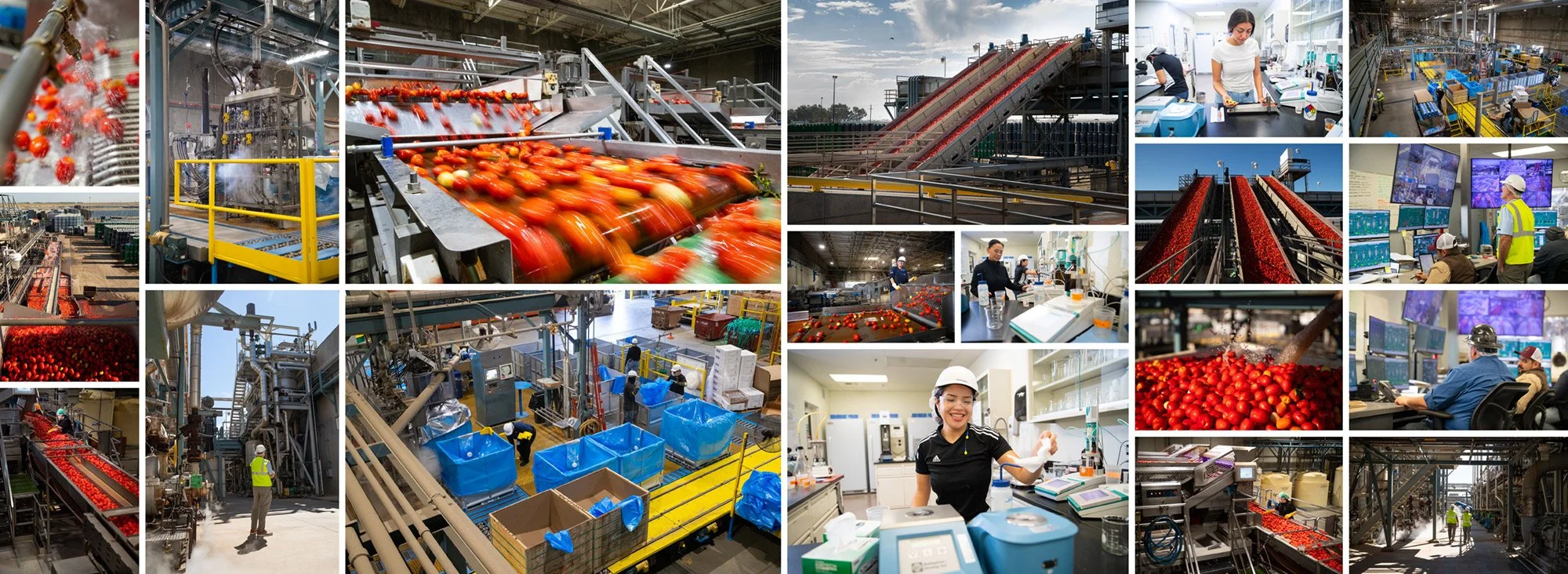
A harvest day should not produce only one video. With thoughtful planning, one or two shoot days can create a full library of marketing material.
Brand Film
A two- to three-minute brand film can combine leadership interviews, harvest activity, processing, drone coverage, and environmental detail. It becomes the anchor piece for the homepage, presentations, trade shows, and sales outreach.
Recruiting Video
Harvest shows the work honestly. That makes it ideal for recruiting. A short film can help operators, technicians, drivers, farm staff, and supervisors see the people, equipment, pace, and pride behind a role before they apply.
Website Photography
A current set of real photographs immediately improves a company website. It replaces generic stock images with the actual land, facility, products, and people that make the business distinctive.
Trade-Show and Sales Content
Large screens and sales presentations need visual proof. Harvest footage can become a looping trade-show reel, a short presentation opener, or a sequence for buyer meetings. It gives a sales team a concise way to show scale and capability.
Social and LinkedIn Content
Short edits can carry the season well beyond harvest. A 15- to 45-second vertical clip can show a piece of machinery, a field-to-facility transition, an employee perspective, or a quality-control moment. Those small pieces help an agriculture brand stay visible without needing a new production every month.
Plan Before the First Truck Arrives
The biggest mistake is waiting until the busiest day of harvest and then hoping a crew can “grab some footage.” Harvest moves quickly. Access is limited. Equipment and people cannot stop for long, and some moments only happen once.
A short pre-production call prevents that problem. It should establish the intended final deliverables, the best days and times for activity, the people available for interviews, areas that require safety approval, drone restrictions, personal protective equipment, and the best points in the field-to-facility process to document.
A production plan does not have to slow the operation down. Done well, it gives the crew a clear route through the day and lets the client identify where filming will add the most value without interrupting work.
Show the Work That Makes the Brand Real
The Central Valley has no shortage of agriculture companies with important work to show. What often gets missed is the chance to document it while the season is alive.
Harvest is not only a busy period. It is a story: people solving problems, equipment moving, crops arriving, and an operation doing what it was built to do.
For Studio Condor, the goal is not to make agriculture look like something it is not. It is to create honest, cinematic photography and video that help growers, processors, and food brands show the people, process, and pride behind their work.
If your company is planning a harvest-season shoot, a website refresh, a recruiting campaign, or a new brand film, now is the time to create the visual library that can support the business all year.
Studio Condor is a Modesto-based video production and commercial photography studio serving agriculture, industrial, and corporate brands throughout California’s Central Valley.